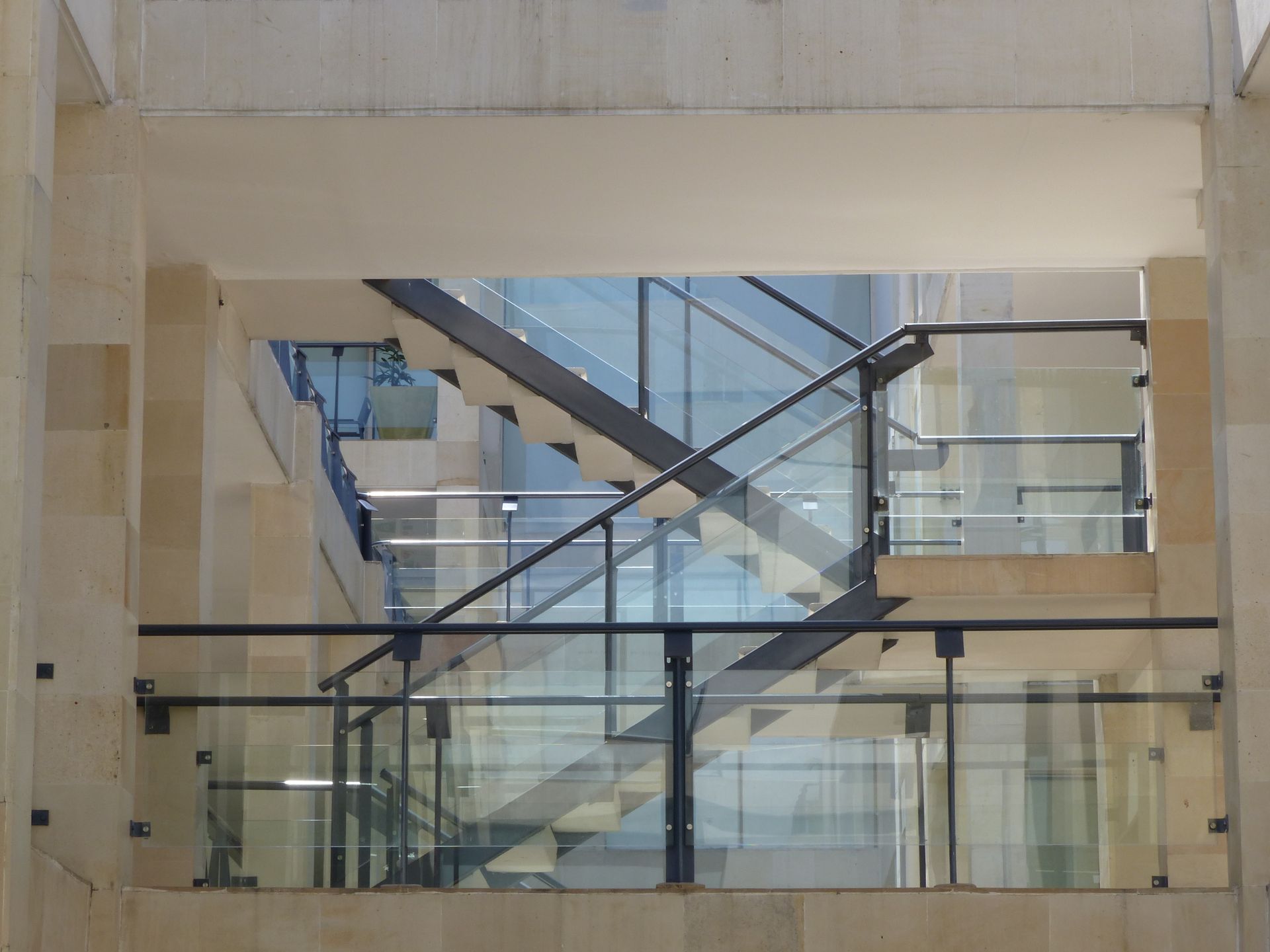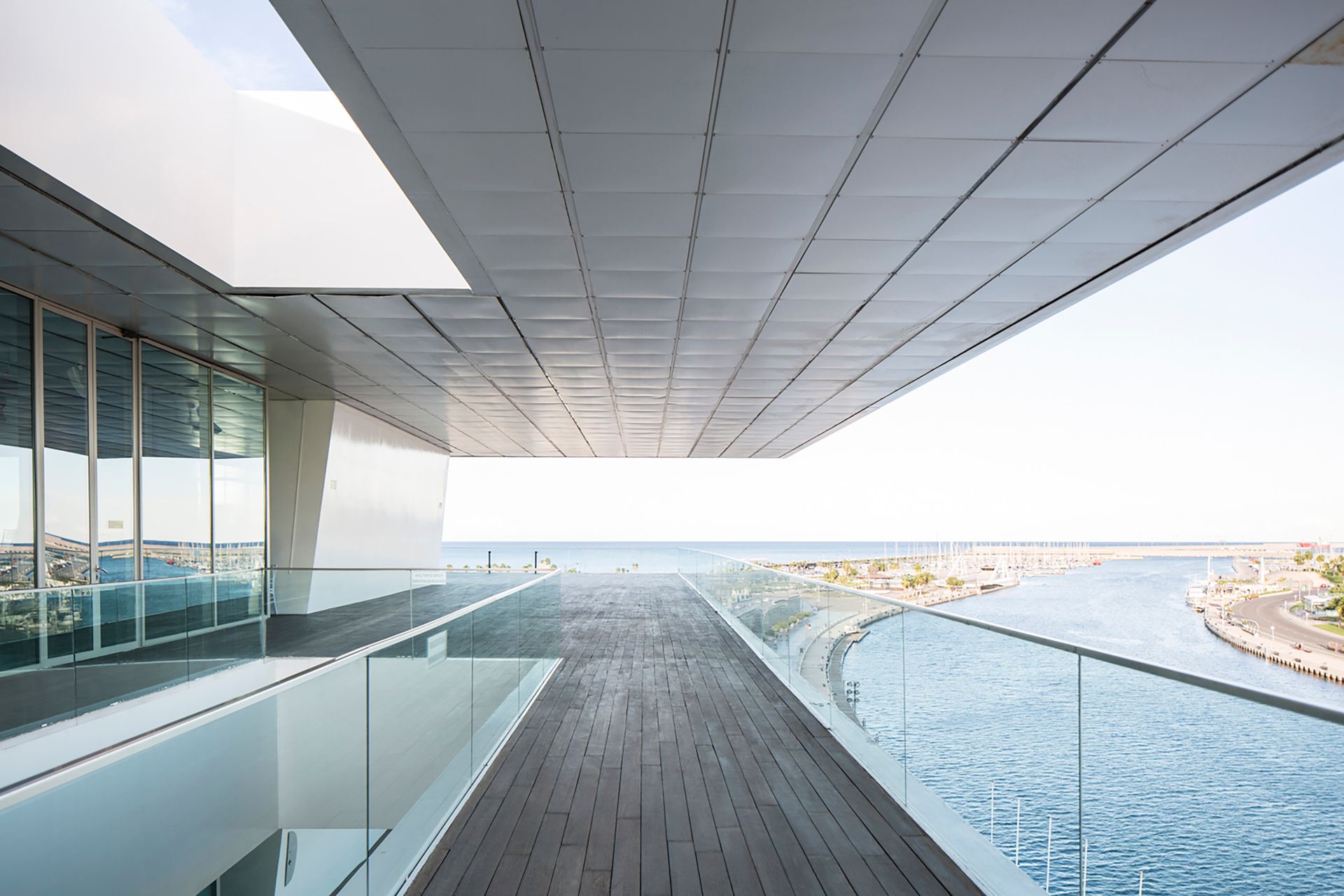


Glass railings can be a safe choice for residential decks when the system is properly designed, fabricated, installed, and maintained for the property. Panel type, hardware, mounting, deck structure, and installation quality all contribute to how the system performs.
For homeowners considering glass railings, the important question is not simply whether glass is safe. It is whether the complete railing system is appropriate for the deck, exposure, and applicable project requirements.
What Makes a Glass Railing Safe?
A residential glass railing works as a system. The glass panels provide the infill, while posts, base shoes, spigots, fasteners, brackets, or other components transfer loads into the supporting structure.
Safety therefore depends on several things working together:
- Suitable safety glass
- Correct panel dimensions
- Properly selected hardware
- Secure mounting
- A sound deck or balcony structure
- Appropriate spacing and layout
- Careful installation
A good-looking railing is not enough. The supporting conditions underneath it matter just as much as the visible glass. Site measurements and a review of the mounting surface are therefore important before fabrication.
What Type of Glass Is Used for Railings?
Railing systems generally use safety glass rather than ordinary window glass. Depending on the project and system, tempered, laminated, or other suitable safety-glass configurations may be considered.
Tempered glass is processed so that it behaves differently from regular annealed glass when broken. Laminated glass uses an interlayer that can help hold pieces together after breakage. The appropriate choice depends on the design, location, mounting method, and applicable requirements.
Homeowners should avoid assuming that every piece of thick glass is suitable for a guard or railing. Glass selection needs to be part of the complete system design.
For projects where minimal framing is important, Westline's frameless glass railing systems provide another configuration to explore, but reduced visual structure does not mean reduced attention to support or installation.
Can Glass Railings Break?
Yes. Glass is strong, but it is not unbreakable.
Impacts, damaged edges, improper installation, unusual stress, or changes to supporting conditions can contribute to breakage. The purpose of using suitable safety glass and an appropriate railing design is to manage those risks.
Edges deserve particular care because damage there can weaken a panel. Homeowners should avoid striking glass edges with heavy objects and pay attention to chips, cracks, loose hardware, or unusual movement.
If a panel becomes damaged, the railing should be assessed rather than assuming the damage is only cosmetic.
Are Glass Railings Safe for Children?
A well-planned glass railing can suit homes with children because the panels create a broad barrier without the same series of horizontal or vertical elements found in some railing styles.
However, child safety depends on the entire environment, not only the railing material. Furniture, planters, benches, toys, or other climbable items placed beside a guard can change how the space is used.
Gates, stairs, door access, deck height, and supervision also matter. When designing for a family home, it is useful to discuss how the deck is actually used rather than selecting a system only from photographs.
What About Pets?
Glass can be useful where homeowners want an enclosed feeling without visually closing the deck. Because the panels are transparent, pets can often see through the railing rather than trying to look between pickets.
Still, the layout needs to suit the animal and property. Openings at edges, underneath panels, beside stairs, or near gates should be considered as part of the design.
Large dogs may also place repeated pressure against railings, so secure mounting and suitable hardware remain important.
Does Frameless Glass Mean Less Safety?
Not necessarily. “Frameless” describes the visual and structural approach, not a lower safety level.
A frameless system still requires support through hardware such as base shoes, spigots, standoffs, or other components. The glass panels and their supports have to work together.
A framed glass railing uses more visible posts or rails, which some homeowners prefer because the system has a clearly defined structure. Both approaches can be appropriate when properly specified for the project.
Why the Deck Structure Matters
One of the easiest things to overlook is what the railing is attached to.
A new railing may be installed on wood framing, concrete, a finished balcony edge, stairs, or another supporting surface. The condition and construction of that surface affect how loads are transferred.
Replacing an older railing can reveal hidden issues such as deteriorated wood, questionable previous fastening, damaged finishes, or conditions that were not visible beforehand.
This is one reason a site review can be more useful than selecting a railing system based solely on appearance or a rough linear measurement.
Homeowners can browse Westline's completed project gallery to see how railing systems relate to different architectural conditions and surrounding materials.
How Should Glass Railings Be Maintained?
Routine cleaning helps the glass look good, but maintenance should include more than appearance.
Periodically look for:
- Chips or cracks
- Loose or shifting hardware
- Movement in panels or posts
- Damaged seals or gaskets
- Deterioration around connections
- Changes to the supporting deck surface
Do not ignore a railing that suddenly feels loose or different.
Coastal weather can also leave moisture, dirt, and salt residue on glass and hardware. Cleaning these surfaces can make inspection easier while helping preserve the railing's appearance.
Do Building Codes Affect Glass Railings?
Yes, railing projects may be subject to building, safety, structural, and municipal requirements. The exact requirements can depend on the property, railing location, deck height, occupancy, system design, and jurisdiction.
Rather than relying on a general article for specific measurements or compliance details, homeowners should verify the requirements that apply to their individual project. Engineering or permitting may also be relevant in some situations.
This is especially important when replacing an older railing because the conditions or requirements affecting a new installation may differ from what existed previously.
So, Are Glass Railings a Good Choice?
For many residential decks, glass railings provide a useful combination of safety, visibility, and architectural openness. The key is treating the railing as a structural system rather than simply a row of glass panels.
Choose the system after considering the supporting deck, hardware, glass configuration, exposure, layout, and how people use the space.
If you are planning a deck or balcony railing and want a site-specific recommendation, you can request an estimate from Westline with photos, measurements, drawings, or other project information. That makes it easier to discuss which railing configuration fits the property before fabrication begins.